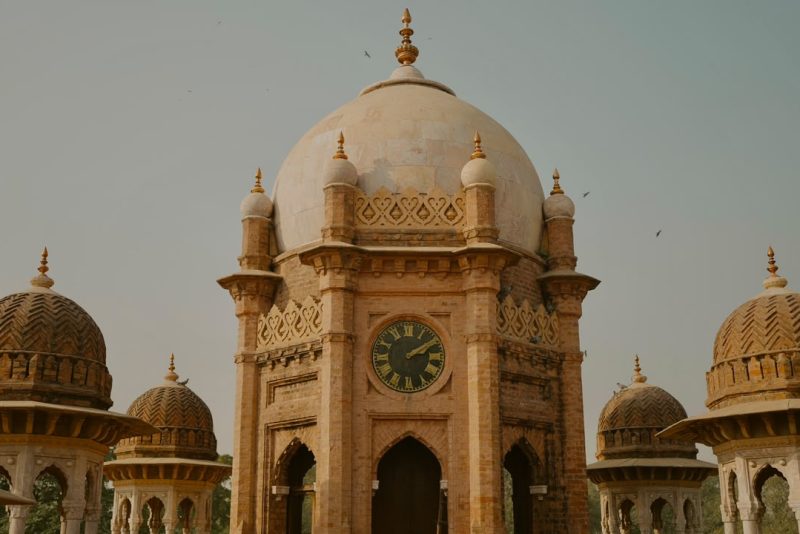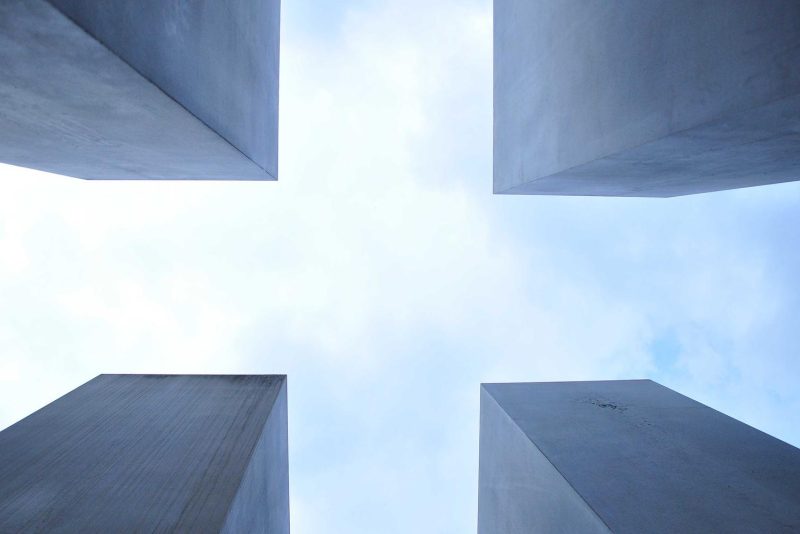

Across civilizations, numbers have never been mere tools for counting—they have carried meaning, rhythm, and even a sense of the unseen order behind the visible world. When lines meet at precise angles and curves unfold with quiet elegance, geometry becomes more than mathematics; it becomes a language. Architecture, in turn, is where that language is given physical form—where abstraction turns into stone, symmetry, and space.
At the heart of this interplay lies a fascination with unity and multiplicity. A single point expands into a circle; a circle can be divided into intricate patterns that seem to repeat endlessly. This transformation from one into many, and many back into one, reflects a deep philosophical idea: that complexity can emerge from simplicity without losing its underlying coherence.
In many historical buildings, especially those rich in ornamentation, one finds repeating tessellations—patterns that extend infinitely without gaps or overlaps. These designs often avoid depicting living forms, instead relying on stars, polygons, and interlacing lines. The result is a visual experience that invites contemplation. As the eye follows the pattern, it becomes aware of both repetition and variation, suggesting an order that is structured yet boundless.
Numbers also play a symbolic role. Certain numbers appear again and again in design—sometimes in the number of sides of a shape, sometimes in the repetition of elements across a surface. These choices are rarely accidental. They often hint at deeper meanings, embedding abstract ideas into physical form. A building, in this sense, becomes a silent text—one that communicates through proportion, alignment, and rhythm rather than words.
Light is another essential element. When it passes through carefully designed openings—grids, screens, or patterned windows—it interacts with geometry to create shifting patterns across floors and walls. These moving shapes remind the observer that structure is not static; it lives in time as much as in space. The architecture begins to feel like a bridge between the material and the intangible.
Underlying all of this is a worldview that sees order as intentional and meaningful. The precision of geometry, the discipline of numerical relationships, and the elegance of architectural design all point toward a deeper unity. They suggest that the universe itself may be structured in a way that invites discovery—where mathematics is not just a human invention, but a reflection of something more fundamental.